
Digital learning tool
on assessing lower-GI symptoms in primary care
about this course
This course introduces the Primary Care Diagnostic Pathway for Lower-GI Symptoms and how it can support you in your clinical practice. This course only looks at the adult version of the pathway, but a paediatric pathway exists too.
By the end of this course, you should be able to:

Explain the purpose, structure and clinical rationale of the pathway, including its role in improving timely diagnosis and appropriate referral.



At Crohn’s & Colitis UK, we believe that everyone living with IBD should have access to high-quality, evidence-based care at every stage of their journey, including before diagnosis

Introduction
Gastrointestinal (GI) symptoms are one of the most common reasons people contact primary care, accounting for up to 10% of primary care consultations.1, 2 Despite this, symptoms can be non-specific and overlap with a wide range of conditions.3-7
For professionals working in primary care, this can present diagnostic challenges. For patients, this can mean living with uncontrolled symptoms and/or without a diagnosis. One-in-seven adults with inflammatory bowel disease (IBD) waited over a year from presenting to primary care with symptoms before being referred to secondary care.8 Another one-in-seven adults with IBD reported being diagnosed during an emergency hospital admission.8 Delays in diagnosis have a significant impact on patient outcomes and quality of life.8
At Crohn‘s & Colitis UK, we believe that everyone living with IBD should have access to high-quality, evidence-based care at every stage of their journey, including before diagnosis. The national Primary Care Diagnostic Pathway for Lower-GI Symptoms was developed to provide a clear and consistent approach to assessment, investigation and referral.9
Working with a collaboration of professional bodies, gut charities, patients and healthcare professionals, the pathway has been developed to prompt earlier recognition and assessment of people presenting with possible IBD.9 The pathway is based on NICE guidance and endorsed by the RCGP and RCN.10

10%
of primary care consultations are to report gastrointestinal symptoms
1-IN-7
adults with IBD wait over a year before being referred to secondary care
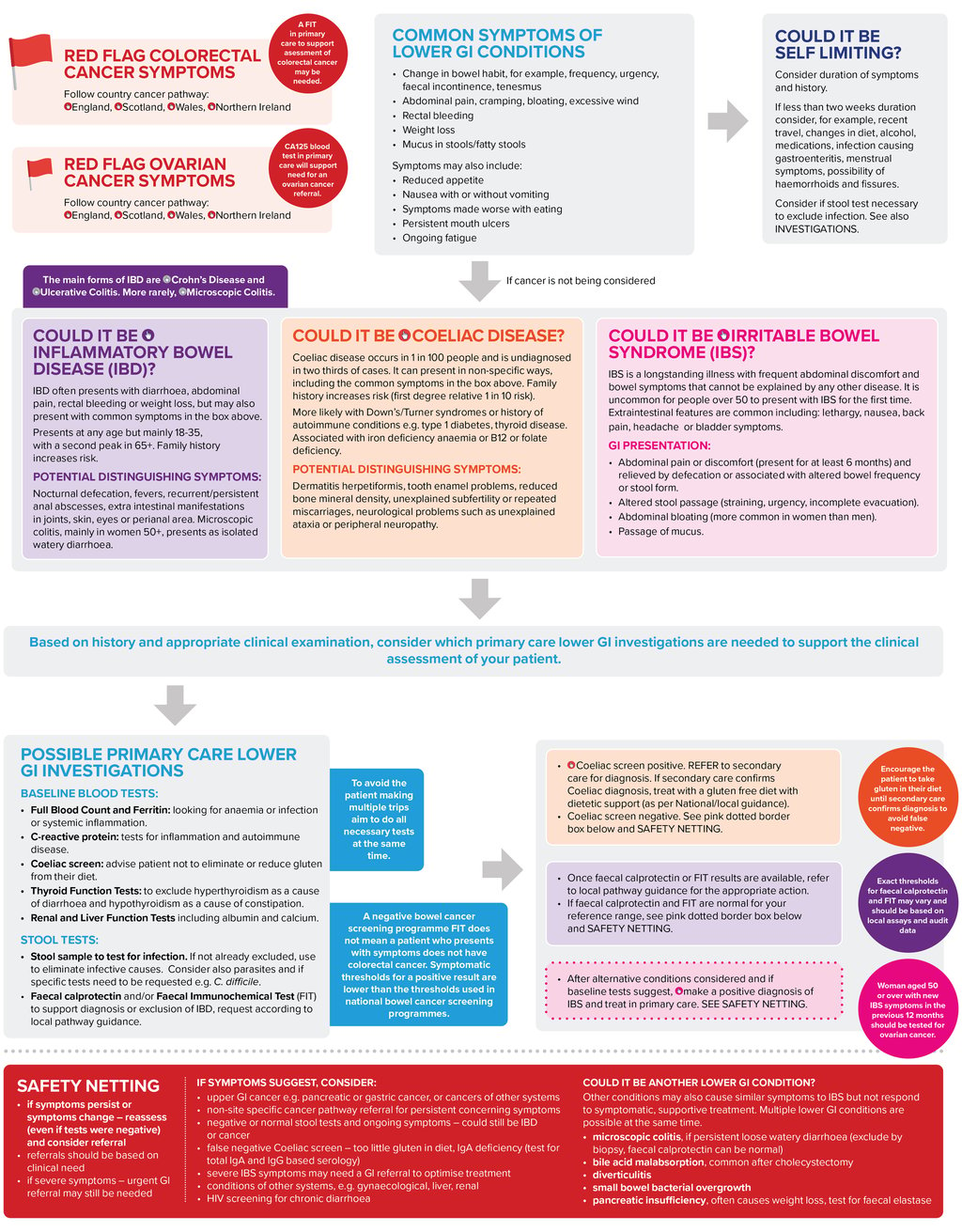
Step-by-step guide to the pathway for primary-care professionals
The symptom led pathway guides clinicians through conditions and investigations to consider when assessing a patient presenting with lower-GI symptoms.
The pathway screens for red-flag cancer symptoms, and links to UK nation specific cancer pathways, providing an early exit for those who need urgent escalation. The pathway continues to outline possible differentials and appropriate use of non-invasive investigations to determine the cause of the patient's symptoms, alongside appropriate safety netting.


click for REFERENCES


A digital learning tool designed to support primary care professionals in diagnosing lower-gastrointestinal symptoms using the national pathway.