

Assess

Treat
Review
Notes
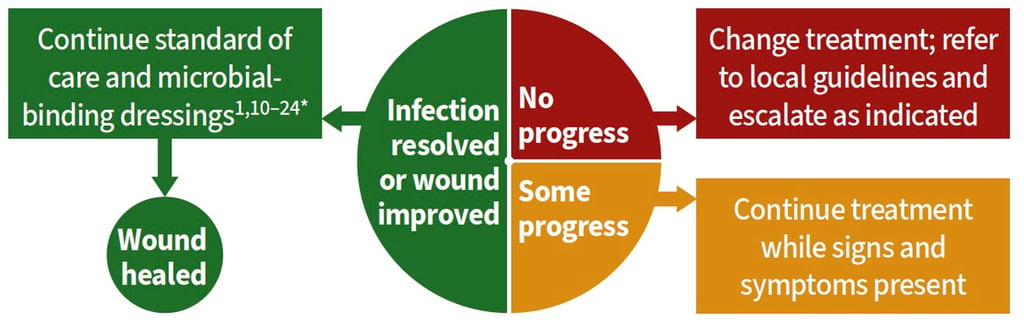
*Microbial-binding dressings have a DACC coating that can control microbial burden to prevent or manage infection in a way that is not expected to contribute to antimicrobial resistance. All treatments should be used per local policy and where clinically appropriate. See below for supplementary tables and references.
Abbreviations
CLTI=critical limb-threatening Ischaemia; CRP=C-reactive protein; DACC=dialkylcarbamoyl chloride; ESR=erythrocyte sedimentation rates; IDSA=Infectious Diseases Society of America; IDT=interdisciplinary team; IWGDF=International Working Group on the Diabetic Foot; TBPI=toe brachial pressure index; TIMERS=Tissue, Infection/Inflammation, Moisture balance, Edge/epithelialisation, Regeneration and repair, Social factors
Aspects of a holistic patient assessment in diabetes-related foot ulceration
– adapted from TIMERS1-5, 7-12
Patient assessment
Comorbidities
Current medication
Functionality and mobility
Nutritional assessment
Skin assessment (including skin tone)
Social factors
Surgical and medical history
Foot assessment
Neuropathic assessment
Oedema
Pallor
Pulses
Skin perfusion
Skin temperature
TBPI/toe systolic pressure
Transcutaneous oxygen pressure
Vitals
Wound assessment
Charcot foot
DFU stage (Wagner, Texas, SINBAD or WIfI)
Imaging as appropriate (CT, MRA, duplex)
Location, duration, size and depth
Odour
Pain (nociceptive or neuropathic)
Periwound condition
Previous investigations and treatments
Tissue types on wound bed (necrotic, sloughy, granulation or epithelial)
Risk factors for wound infection
– adapted from the International Wound Infection Institute¹ ²⁵⁻⁴⁷
Patient risk factors
Acute kidney injury/disease
Alcohol, smoking or illicit drug use
Conditions associated with hypoxia or poor perfusion
Connective tissue disorders (e.g. Ehlers-Danlos syndrome)
Corticosteroid use
Immune disorders (e.g. acquired immune deficiency syndrome)
Lymphoedema
Malnutrition or obesity
Neuroarthropathy
New/worsening azotaemia and electrolyte abnormalities
Peripheral arterial disease (inc. ischaemia)
Peripheral neuropathy (sensory, motor and autonomic)
Poor adherence to treatment plan
Poorly controlled diabetes
Radiation therapy or chemotherapy
Severe/worsening hyperglycemia or acidosis
Wound risk factors
Duration of wound
Foreign body presence (e.g. drains, sutures or wound dressing fragments)
Haematoma
Impaired tissue perfusion
Increased exudate and oedema that is not adequately managed
Large or deep wounds
Necrotic or sloughy wound tissue
Penetration to subcutaneous tissues (fascia, tendon, muscle, joint or bone)
Previous ulceration or amputation
Probing to bone
Traumatic aetiology
Wounds over bony prominences
Environmental risk factors
Hospitalisation (due to increased risk of exposure to antimicrobial-resistant microorganisms)
Inadequate hand hygiene and aseptic technique
Inadequate management of moisture (e.g. due to exudate, incontinence or perspiration)
Interface pressure that is inadequately offloaded
Unhygienic environment (e.g. dust, unclean surfaces, or presence of mould/mildew)
Signs of sepsis⁶
Sepsis is a life-threatening condition in which the body's response to infection causes injury to its tissues and organs. Organ dysfunction is a key component in any diagnosis of sepsis.
Act on any of the following red flags:
S. Slurred speech or confusion
E. Extreme shivering or muscle pain
P. Passing no urine (in a day)
S. Severe breathlessness
I. It feels like you are going to die
S. Skin mottled or discoloured

Guidance










click for REFERENCES