

Assess risk
Prevent
Assess

Treat
Review
Notes
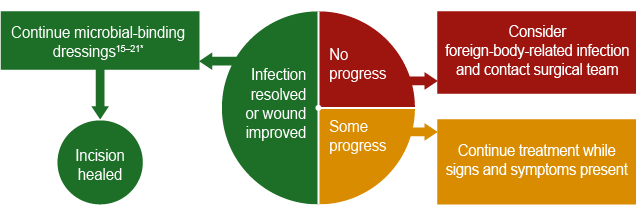
*Microbial-binding dressings have a DACC coating that can control microbial burden to prevent or manage infection in a way that is not expected to contribute to antimicrobial resistance. All treatments should be used per local policy and where clinically appropriate. This pathway applies to closed surgical incisions healing by primary intention. See below for supplementary tables, abbreviations and references.
Abbreviations
CDC=Centers for Disease Control and Prevention; CRP=C-reactive protein; DACC=dialkylcarbamoyl chloride ESR=erythrocyte sedimentation rates; PCT=pro-calcitonin; SSI=surgical site Infection; TIME=Tissue, Infection/inflammation, Moisture balance, Edge/epithelialisation; WBC=white blood cell.
Risk factors for SSIs⁵⁻¹³
Patient risk factors
Advanced age
Chronic liver or kidney disease
Diabetes
Immunosuppression (drug induced or genetic)
Malnutrition
Obesity
Pre-operative nasal colonisation with Staphylococcus aureus
Respiratory conditions
Smoker/nicotine use
Steroid use
Drug/alcohol abuse/addiction
Surgical procedure risk factors
Anatomical location of surgery (consult guidance for specifics)
Classification of surgery as clean, clean/contaminated, contaminated or dirty
Complexity of surgical procedure
Emergency procedure
Interruption of asepsis during surgery
Introduction of a prosthetic implant
Prolonged duration of surgery
Signs of sepsis²⁴
Sepsis is a life-threatening condition in which the body's response to infection causes injury to its tissues and organs. Organ dysfunction is a key component in any diagnosis of sepsis.
Act on any of the following red flags:
S. Slurred speech or confusion
E. Extreme shivering or muscle pain
P. Passing no urine (in a day)
S. Severe breathlessness
I. It feels like you are going to die
S. Skin mottled or discoloured

Guidance







click for REFERENCES